
Publication date: 21 August 2026
Estimated reading time: 3 minutes
Businesses no longer need to keep every digital system on computers sitting inside their own offices.
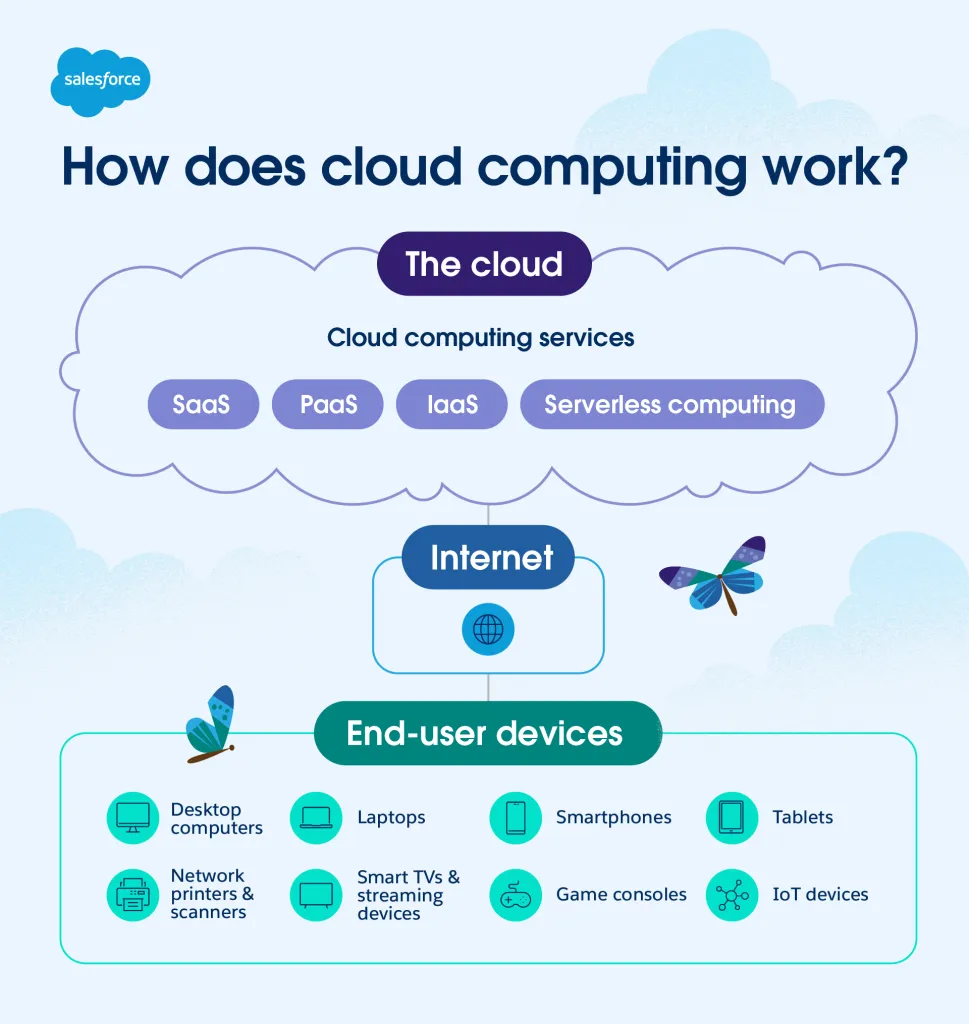
Cloud computing allows organisations to access computing resources such as storage, software, databases and processing power through the internet.
For small businesses, large organisations and technology professionals, this has changed how digital services can be deployed and managed.
As I continue building Bwanika.com and developing my career in ICT and digital solutions, understanding cloud technology is becoming an increasingly important part of the journey.
What is cloud computing?
Cloud computing is the delivery of computing resources over a network, usually the internet.
Instead of relying entirely on local hardware, an organisation can use cloud services for things such as:
- File storage
- Websites
- Databases
- Applications
- Backups
- Computing power
- Collaboration tools
The user doesn’t necessarily need to own or maintain the underlying physical infrastructure.
Why are businesses moving to the cloud?
One major reason is flexibility.
A business can use cloud services without having to purchase and maintain all the physical infrastructure itself.
Cloud services can also make it easier for teams to access systems from different locations, depending on the service and security configuration.
For businesses with employees working across different offices or locations, this can be particularly useful.
Cloud computing supports remote work
Modern teams often need to collaborate across locations.
Cloud-based applications can allow employees to work with shared documents, communication platforms, business applications and other resources online.
This can make collaboration easier when properly implemented.
However, remote access also makes cybersecurity important.
A cloud account should never be treated as automatically secure simply because the service is provided by a major technology company.
The three major cloud service models
Cloud computing is commonly discussed using three service models.
Infrastructure as a Service — IaaS
IaaS provides fundamental computing resources such as virtual machines, storage and networking.
It gives organisations greater control but also requires more technical management.
Platform as a Service — PaaS
PaaS provides an environment where developers can build and deploy applications without managing all the underlying infrastructure themselves.
Software as a Service — SaaS
SaaS delivers complete software applications over the internet.
Users generally access the software through a browser or application rather than installing and managing the entire system themselves.
These models serve different purposes.
Cloud computing and websites
Cloud technology is also important for web development.
A website may depend on:
Hosting + databases + storage + networking + security + content delivery
Many modern web applications use cloud infrastructure to provide these components.
For developers, understanding basic cloud concepts can therefore be useful even when their primary skill is web development.
What about small businesses?
Cloud services can be particularly useful for smaller organisations that need professional digital tools without building large internal IT infrastructures.
A small business might use cloud services for:
- Accounting
- Customer management
- File storage
- Website hosting
- Online collaboration
- Backups
The key is choosing services that match the actual needs of the business.
Cloud doesn’t eliminate cybersecurity risks
This is one of the most important points.
Moving systems to the cloud doesn’t mean security becomes someone else’s problem.
Businesses still need to consider:
- Strong passwords
- Multi-factor authentication
- User permissions
- Data protection
- Backups
- Software updates
- Account monitoring
Poorly configured cloud systems can create security problems even when the underlying cloud provider has strong security infrastructure.
Cloud skills are becoming useful for ICT professionals
For people building careers in technology, cloud computing connects with many other areas.
Cloud + networking + cybersecurity + programming + databases
Understanding these connections can make it easier to work with modern digital systems.
This is also an area I want to continue exploring through Bwanika.com.
My goal is not simply to list ICT skills, but to keep learning how different technologies work together and share useful knowledge through the platform.
What should beginners learn first?
If you’re new to cloud computing, don’t start by trying to master every cloud platform.
Begin with the fundamentals:
- Understand what cloud computing means.
- Learn the difference between IaaS, PaaS and SaaS.
- Learn basic networking concepts.
- Understand storage and databases.
- Study basic cloud security.
- Build a small practical project.
Once you understand the fundamentals, learning specific cloud platforms becomes easier.
What happens next?
Cloud computing is likely to remain an important part of digital infrastructure as organisations continue adopting online services, AI, data systems and distributed applications.
But cloud technology is not a magic solution.
Businesses still need good planning, security, skilled people and appropriate technology choices.
The real value comes from using the cloud to solve a genuine business problem.
Key Takeaways
- Cloud computing provides computing resources through the internet.
- Businesses can use the cloud for storage, software, databases, websites and infrastructure.
- IaaS, PaaS and SaaS are three important cloud service models.
- Cloud technology can support collaboration and remote work.
- Cloud adoption does not remove cybersecurity responsibilities.
- Understanding cloud fundamentals can benefit ICT and technology professionals.
As I continue building Bwanika.com, cloud computing is another area I want to explore as part of my wider technology journey.
Technology is not just about knowing individual tools. It’s about understanding how those tools connect to solve real problems.
Explore more ICT, cloud computing, programming, cybersecurity and technology content on Bwanika.com.