
Publication date: 22 August 2026
Estimated reading time: 3 minutes
Technology is becoming part of the places where we live.
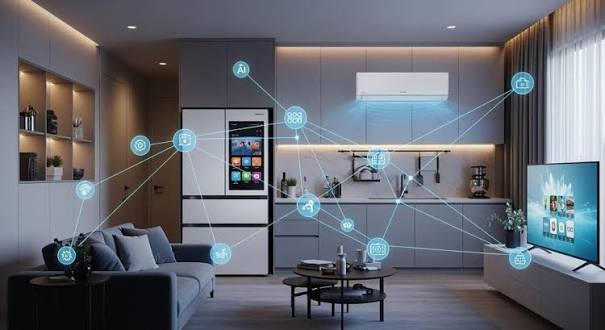
From connected lights and smart speakers to security cameras, thermostats and home appliances, smart-home technology allows different devices to communicate and be controlled digitally.
As someone building my career around technology, I find this particularly interesting because a smart home brings together several areas I work and write about: ICT, software, networking, cybersecurity, artificial intelligence and digital solutions.
Through Bwanika.com, I want to explore not just the latest gadgets, but how connected technology is actually changing people’s everyday experiences.
What is a smart home?
A smart home is a home where connected devices can communicate with networks and, in many cases, be controlled automatically or remotely.
Depending on the technology being used, a smart home might include:
- Smart lighting
- Connected security cameras
- Smart doorbells
- Smart speakers
- Connected appliances
- Smart thermostats
- Home sensors
- Automated blinds
Some devices can be controlled through smartphones, voice interfaces or automated routines.
Why are people interested in smart homes?
Convenience is one of the biggest attractions.
Imagine being able to control certain devices without manually operating each one.
For example, a homeowner might create a routine that turns selected lights on at a particular time or receive a notification from a connected security device.
The value isn’t simply having more gadgets.
It’s being able to make everyday tasks easier.
Smart homes depend on connectivity
Behind a smart device is a network.
A typical connected-home environment can involve:
Device → Network → Application → Cloud service
This means smart-home technology isn’t just about hardware.
It also involves software, networking, data and security.
That’s one reason I see smart homes as an interesting area for ICT professionals and developers.
AI could make smart homes more useful
Artificial intelligence can potentially make connected devices more responsive to user preferences and patterns.
Instead of simply responding to individual commands, future systems may increasingly use context to help automate certain tasks.
However, more automation also raises important questions.
How much control should an AI system have?
What information does it need?
What happens if it makes a mistake?
These are questions developers and manufacturers need to consider carefully.
Security should not be ignored
This is one of the biggest issues I would consider before adding connected devices to a home.
A smart device is another device connected to a network.
If it is poorly secured, it can potentially create another entry point into that digital environment.
Basic precautions include:
- Change default credentials where applicable.
- Use strong, unique passwords.
- Enable additional authentication where available.
- Keep device software updated.
- Review permissions.
- Secure the home network.
- Remove devices you no longer use.
The more connected your home becomes, the more important security becomes.
Privacy matters too
Some connected devices can collect information about how they are used.
Before buying a smart device, I would recommend checking:
- What information does it collect?
- Does it connect to a cloud service?
- How is the information used?
- What controls does the manufacturer provide?
- Can the device continue working if certain online services are unavailable?
Reading the manufacturer’s privacy and security information can help you make a more informed decision.
Smart homes and the UAE
The UAE has invested heavily in smart-city and digital infrastructure initiatives, making connected technology an interesting area to watch locally.
For residents, smart-home technology can complement an increasingly connected lifestyle.
But adoption should still be based on practical needs.
A home doesn’t become “smarter” simply because it contains more connected devices.
The technology should provide a useful benefit.
What developers can learn from smart homes
Smart homes create opportunities for software developers.
Developers can work with:
- APIs
- Mobile applications
- Cloud services
- IoT platforms
- Databases
- Automation
- Cybersecurity
This means someone learning programming today can eventually build applications that interact with physical devices.
That’s a fascinating direction for software development.
My view on the future
I don’t think the future of smart homes should simply be about putting an internet connection into every appliance.
The more interesting future is useful automation.
Technology should quietly help people rather than constantly demand attention.
For me, this is the bigger lesson from smart-home technology.
Good technology should solve problems in the background.
As I continue building Bwanika.com, I want to keep exploring technologies that bring together software, hardware and real-world problems.
What happens next?
Smart-home technology will continue evolving alongside AI, networking, sensors and cloud computing.
Some devices will become more capable, while others may disappear if they don’t provide enough value.
The winners won’t necessarily be the devices with the most features.
They may be the ones that are:
Useful + reliable + secure + easy to use.
Key Takeaways
- Smart homes connect devices through digital networks.
- Connected technology can improve convenience and automation.
- AI could make smart-home systems more adaptive.
- Security and privacy should be considered before connecting devices.
- Smart homes bring together hardware, software, networking and cybersecurity.
- Developers have opportunities to build applications for connected environments.
As I continue growing Bwanika.com, I’ll keep exploring how technology moves from our screens into the physical world.
The future of technology isn’t only on our phones and computers. Increasingly, it is becoming part of the places we live.
Explore more technology trends, ICT, AI and cybersecurity content on Bwanika.com.